Across the United States, a fundamental shift is reshaping the built environment. Office buildings—once the backbone of urban business districts—are increasingly being reimagined into residential, hospitality, mixed-use, and specialty spaces. What was once considered a niche strategy has rapidly become a mainstream solution to some of the most pressing challenges in real estate today.

Why Office Conversions Are Accelerating
The surge in office conversions is being driven by a convergence of market forces:
- Persistently high office vacancy rates fueled by hybrid and remote work
- Growing housing shortages in major metro areas
- Economic pressure on underperforming office assets
- Government incentives supporting adaptive reuse
By 2025, office-to-residential conversions alone are expected to deliver over 70,000 new apartment units, representing roughly 42% of all adaptive reuse projects nationwide . In fact, more than 1.2 billion square feet of office space is now considered viable for conversion .
The message is clear: adaptive reuse is no longer optional—it’s a critical strategy for repositioning real estate portfolios and revitalizing cities.
The Reality: Conversions Are Complex
While the opportunity is massive, execution is anything but simple.
Most office buildings were never designed for residential living, hotel stays, or lab environments. As a result, developers face significant hurdles when evaluating feasibility. Common challenges include:
- Deep floor plates that limit access to natural light
- Outdated glazing systems with poor thermal performance
- Excessive exterior noise impacting livability
- HVAC systems not designed for 24/7 occupancy
- Limited plumbing infrastructure for distributed layouts
- High costs and long timelines for façade replacement
These constraints can quickly derail projects—or make them financially unworkable—if not addressed strategically.
A Smarter Approach: Targeted Retrofit Solutions
Rather than defaulting to costly, full-scale renovations, many successful conversion projects are taking a more strategic path: targeted retrofits.
This approach focuses on upgrading key building systems—particularly the building envelope and interiors—to meet the needs of the new use without major structural changes.
NGS specializes in this model, helping developers unlock value through solutions such as:
- Window inserts to improve insulation and reduce noise
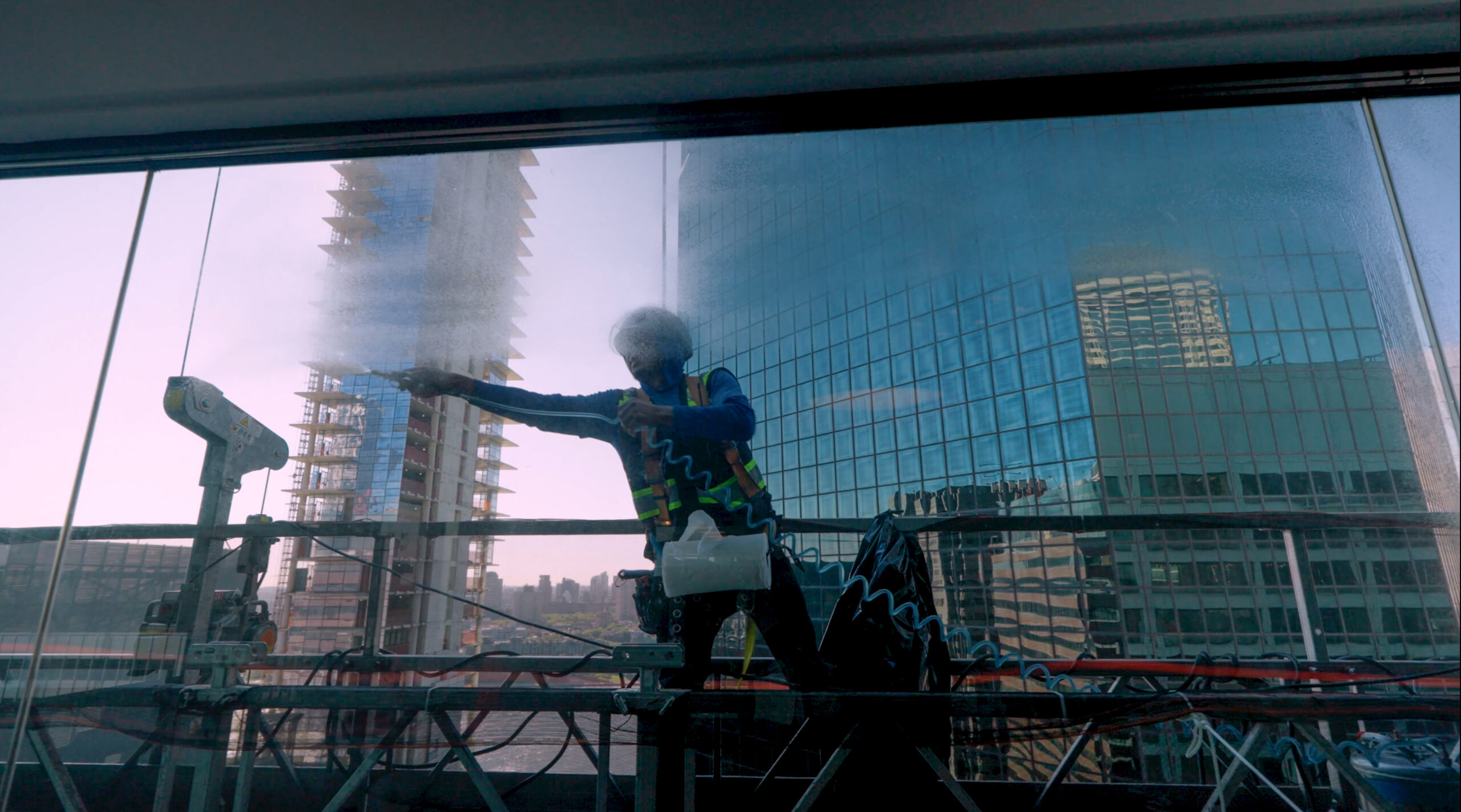
- Solar control and Low-E films to enhance energy performance and comfort
- Architectural surface finishes to transform interiors quickly and cost-effectively
- Decorative and privacy films to support new layouts without construction
- Security films to strengthen existing glass
These solutions enable buildings to achieve modern performance standards while avoiding the cost and disruption of full replacement strategies.
Conversion Use Cases: One Strategy, Many Applications
Office conversions are not limited to residential. Today’s projects span a wide range of asset types:
Residential Conversions
Transforming offices into apartments or condos requires elevated standards for comfort, privacy, and energy efficiency. Solutions that improve thermal performance and acoustics are essential to creating livable environments.
Hospitality
Guest experience is everything. Noise reduction, consistent thermal comfort, and rapid interior upgrades are critical to meeting brand standards and minimizing downtime.
Mixed-Use Developments
Blending residential, retail, and office requires flexibility. Developers must balance visibility, privacy, and performance across different uses—often within the same building envelope.
Life Sciences & Labs
These conversions demand strict environmental control and energy efficiency. Enhancing building performance without full reconstruction is key to feasibility.
Education & Institutional
Safety, durability, and budget constraints define these projects. Improving comfort and security without major capital investment is essential.
Coworking & Flexible Workspace
Speed and adaptability are paramount. Spaces must evolve quickly while maintaining comfort, functionality, and strong visual identity.
The Bigger Picture: Reimagining the Built Environment
Office conversions are about more than filling empty buildings—they’re about redefining how space is used in a post-pandemic world.
Cities like New York, Washington, D.C., and Los Angeles are leading the way, with thousands of units already in the pipeline and policies designed to accelerate redevelopment . Meanwhile, adaptive reuse is helping transform downtowns into vibrant, mixed-use communities that extend beyond the traditional 9-to-5.
In many cases, converting existing structures is also more sustainable than ground-up construction—reducing material use, shortening timelines, and lowering environmental impact.
Enabling What’s Next
The question is no longer whether office conversions will happen—it’s how to execute them successfully.
Developers who embrace targeted, performance-driven retrofit strategies will be best positioned to overcome the inherent challenges of these projects. By improving comfort, efficiency, and design without unnecessary structural changes, it becomes possible to turn underutilized office assets into high-performing, future-ready spaces.
At NGS, that’s exactly where we focus—helping bring these complex projects to life in a way that’s both practical and profitable. Contact us today to get started!